 Custom parts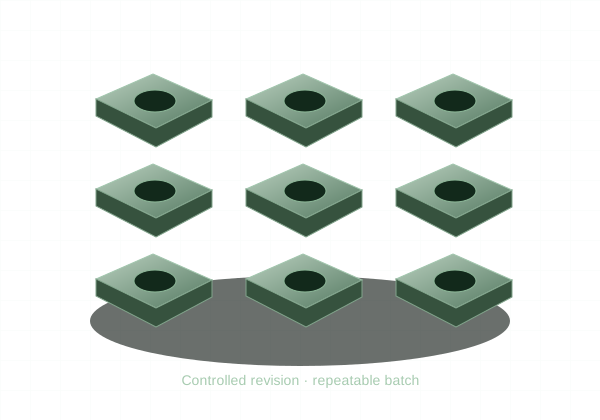
Use a stable revision and a batch size tied to demand, not just an attractive unit price.
What changes after a prototype
Repeated parts create an opportunity to share setup effort and refine workholding. They also make revision control more important. A last-minute geometry change can invalidate a fixture, drawing, or inspection plan that was created for the previous version.
Separate fixed and recurring effort
Programming and setup are spread over the batch. Material, cutting time, handling, and inspection continue per part. Quantity can reduce the setup share without eliminating the recurring work. Compare the whole quote rather than assuming a fixed discount curve.
Control the release package
Use a part number, revision, STEP model, and matching drawing. Identify material and finish requirements explicitly. If a future release must match an earlier part, keep the accepted specification rather than relying on a photograph or memory.
Choose the ordering route
The online CNC tool handles 1–20 pieces per part within its scope. Larger batches and special release arrangements use custom RFQ. Inventory risk, design maturity, and demand should guide the quantity. A small verified batch is often a better business decision than a large batch of a changing design.