 Custom parts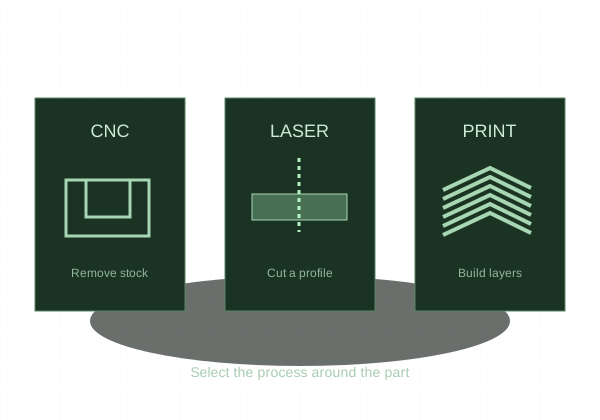
Start with shape and function, then compare cost and finish. No single process is best for every custom part.
CNC for solid-stock features
Use machining for suitable metal or engineering-plastic parts with fitted surfaces, bores, threads, and material properties that matter. Tool access and workholding are key constraints. A block with a deep hidden cavity is not necessarily machinable simply because it exists in CAD.
Laser for flat profiles
Use the CO₂ laser for supported nonmetal sheets with a uniform thickness and 2D outline. Acrylic panels, MDF templates, and plywood profiles fit this route. It does not create machined pockets or imply metal-cutting capability. Kerf and actual sheet thickness affect assembly.
FDM for complex polymer shapes
Use printing for prototypes, housings, nests, and suitable functional plastic geometry. Layers, support removal, and direction-dependent strength are part of the design. The exact material and build structure determine whether a part is useful in its intended environment.
Combine processes when useful
A machined base, printed nest, and laser-cut template can each serve a different job in one project. Keep interface dimensions consistent and allow realistic tolerance between processes. Validate the assembly rather than assuming a shared CAD model creates an exact physical fit.