 Custom parts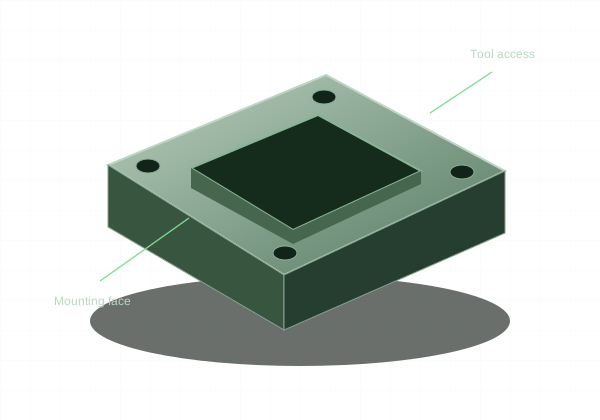
Choose milling for parts whose important features are flats, pockets, or hole patterns rather than rotational profiles.
Where milling fits
A rotating cutter removes material while the workpiece is located in a fixture or vise. Typical geometries include mounting plates, adapter blocks, machine brackets, fixture components, and housings. Tool access matters: the cutter and its holder must reach every machined surface without striking another part feature.
Inside corners stay round
A round end mill leaves an internal radius. A smaller radius requires a smaller tool, which is less rigid and has less practical reach. Use generous corner radii and reserve small detail for shallow features. A small clearance relief can let a square mating component fit without demanding a square internal machined corner.
Think in setups
Features on several faces may need reorientation and additional workholding. Group critical features on the same accessible face when function allows. Preserve enough solid material for gripping. A thin, hollow part with features on every side can be much harder to hold than its overall dimensions suggest.
A practical example
For a sensor bracket, put the mounting face, locating holes, and main pocket on a common accessible side. Use standard clearance holes for bolts and tighter tolerances only on the locating features. This keeps the relationship between functional surfaces clear without making every edge a precision feature.