 Custom parts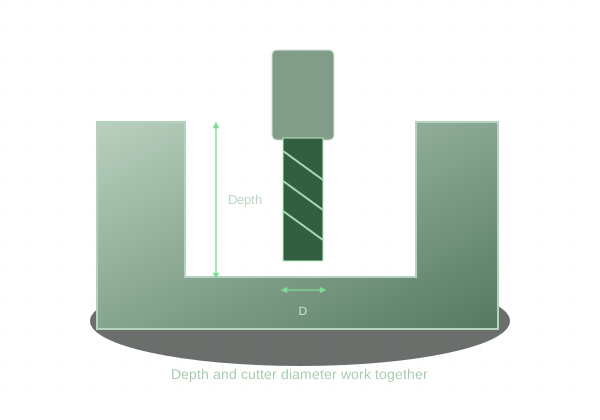
Make cavities only as deep as the part needs, and keep the opening large enough for a rigid cutting tool.
Depth alone is not the limit
A wide open cavity can be easier than a shallow narrow slot. The cutter must reach the bottom while its shank and holder clear the walls. Tool stickout, flute length, diameter, and chip evacuation all influence the feasible operation.
Use depth-to-tool proportion as a warning
Increasing reach relative to tool diameter increases deflection risk. A 1 inch deep feature cut with a 1/2 inch tool has a very different rigidity problem from one demanding a 1/8 inch tool. This comparison is a design aid, not an automatic pass/fail ratio for KRC.
Reduce unnecessary removal
If a pocket exists only to reduce weight, consider whether a shallower pocket, an open relief, or a different stock shape would work. Removing most of a solid block can consume substantial machining time. Keep bottom floors thick enough to remain stable during clamping and cutting.
Make access explicit
Open pockets, generous internal radii, and clear wall transitions make the process simpler. Avoid an overhanging lip that blocks a straight cutter from reaching the bottom. The online envelope does not override tool-access limits, and no blanket pocket-depth guarantee is implied by a model upload.