 Custom parts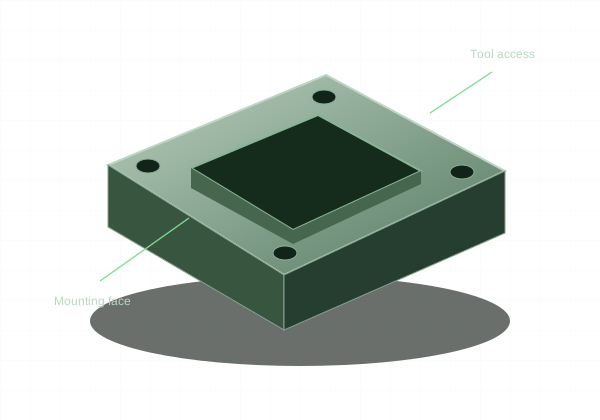
Choose CNC when accurate mating features, solid stock properties, or durable threads matter more than the lowest prototype cost.
From solid stock to finished geometry
CNC machining removes material with controlled cutting tools. Milling produces pockets, profiles, hole patterns, and flat mounting faces. Turning is well suited to diameters, bores, shoulders, and other features arranged around a centerline. A part may need both processes. The CAD model defines shape; a drawing carries requirements that geometry alone cannot communicate.
What the online route covers
Upload one solid body as STEP or STP. The current CNC quote supports quantities of 1–20 and parts within a 14 × 14 × 14 inch bounding envelope. Standard dimensional tolerance is ±0.005 inch unless a tighter accepted requirement applies. A PDF drawing is optional, but becomes important for threads, fitted holes, datums, surface finish, and dimensions with special tolerances. Geometric complexity and tool access still determine manufacturability.
Design for straightforward machining
Keep pockets open to a cutter, leave radii in internal corners, and place holes on accessible faces. Use the same hole and thread sizes where possible. Select tight tolerances only on functional features. Thin walls, deep narrow slots, and large amounts of stock removal add machining and workholding effort.
Choose the right ordering path
Use the instant quote for supported models, materials, and quantities. The custom RFQ route accommodates larger batches, unlisted materials, assemblies, or requirements beyond the online controls. Every CNC order receives a manufacturability review before production; passing a size check alone does not establish a production plan.