 Custom parts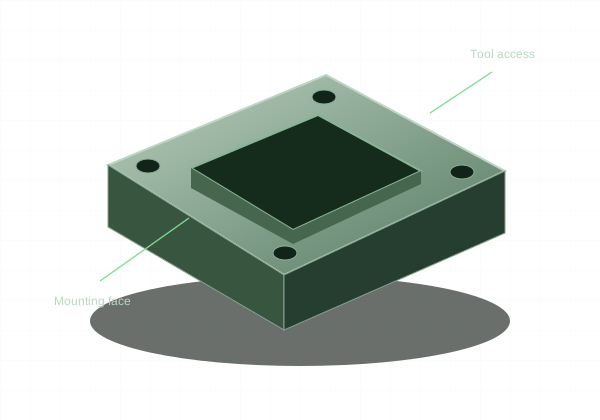
Start with the machine interface: mounting pattern, datum surfaces, sensor clearance, and the motion envelope.
Part and process opportunities
Sensor brackets, fixture nests, actuator adapters, and guide blocks are useful custom-part directions. A machined component can provide stable locating features, while a printed nest can support an early process trial. These are application examples, not claims of completed customer programs.
Design the interface
Position-sensitive hardware needs a clear reference to the machine. Use locating features for repeatable position and clearance holes for clamping where appropriate. Keep adjustment slots deliberate so they allow setup without compromising stiffness. Check cable routing and tool access for installation.
Plan for the real use
Cycle count, impact, coolant, and debris can change material performance. A printed prototype that survives a demonstration may not suit continuous operation. Define wear surfaces and replaceable details so a small service part does not require replacing the whole assembly.
Prepare a clear manufacturing package
Use a model that represents the intended part, a matching drawing for functional requirements, and a defined material and quantity. Choose the online process for supported configurations. Larger batches, unlisted materials, and special requirements follow custom RFQ. Industry examples describe possible uses; they are not evidence of certification or a past customer relationship.