 Custom parts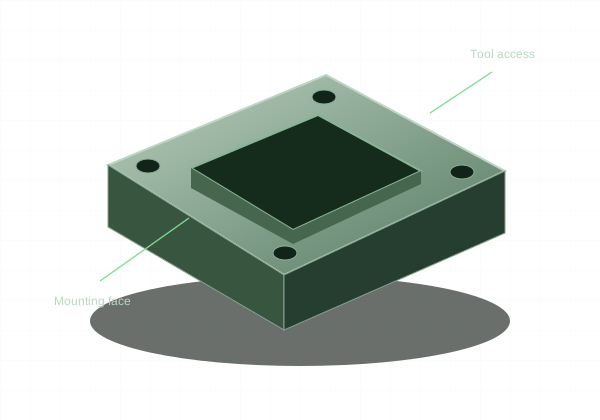
Identify what failed, what must fit, and what environment the replacement will see before choosing a process.
Part and process opportunities
Guide blocks, bushings, mounting plates, and wear pads are useful examples. CNC can produce defined mechanical interfaces, and engineering plastics may suit selected sliding or protective surfaces. A replacement should be specified from functional dimensions rather than copied from a worn surface without correction.
Design the interface
Separate locating dimensions from clearance dimensions. A worn bore or bent bracket may no longer show the intended geometry. Define the mating part and the desired fit. Include any grease paths, reliefs, or installation features that support reliable operation.
Plan for the real use
Sustained load, debris, temperature, and lubrication affect wear materials. UHMW, acetal, nylon, and steel solve different problems. Design replaceable wear details so maintenance can target the consumable component instead of an entire subassembly.
Prepare a clear manufacturing package
Use a model that represents the intended part, a matching drawing for functional requirements, and a defined material and quantity. Choose the online process for supported configurations. Larger batches, unlisted materials, and special requirements follow custom RFQ. Industry examples describe possible uses; they are not evidence of certification or a past customer relationship.