 Custom parts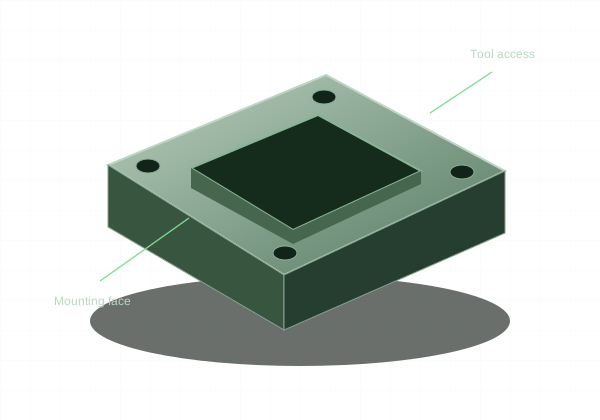
Treat vibration, impact, dirt, and water as design inputs—not surprises after installation.
Part and process opportunities
Accessory mounts, spacers, fixture tooling, and packaging prototypes are useful custom manufacturing directions. A durable part needs adequate section thickness, fastener support, and a suitable material. A billet appearance is not proof of structural suitability.
Design the interface
Use generous transitions and avoid thin tabs with sharp internal corners. Define mounting geometry from measured interfaces or controlled CAD. Leave room for fastener access and surrounding suspension or drivetrain motion. Abrasive contact may justify a separate replaceable wear surface.
Plan for the real use
Load-bearing and safety-critical components require application-specific engineering and testing. Corrosion, fatigue, and loosening need consideration alongside static strength. Printed models can check packaging without being qualified replacements for metal structural components.
Prepare a clear manufacturing package
Use a model that represents the intended part, a matching drawing for functional requirements, and a defined material and quantity. Choose the online process for supported configurations. Larger batches, unlisted materials, and special requirements follow custom RFQ. Industry examples describe possible uses; they are not evidence of certification or a past customer relationship.