 Custom parts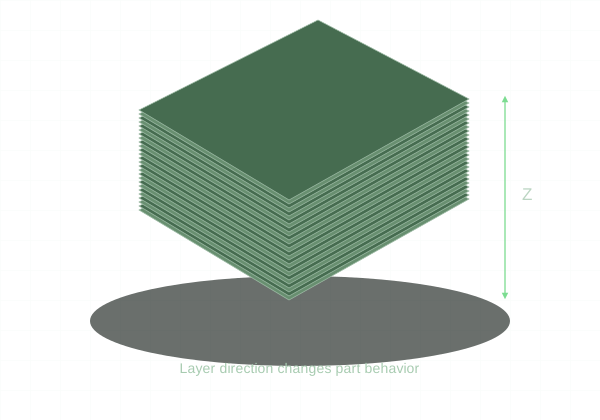
The right prototype is the one that answers the next decision—not necessarily the one that looks most finished.
Part and process opportunities
A physical model can reveal clearance problems, awkward assembly steps, or proportions that are hard to judge on screen. A machined prototype can also test actual material and fitted surfaces. Use the simplest process that preserves the features relevant to the test.
Design the interface
Identify critical interfaces and the measurements that define success. A fit check needs representative mating geometry; a strength test needs representative material and loading. Printed layer direction can make a prototype behave differently from a solid-stock production part.
Plan for the real use
Label the revision, document results, and update the model and drawing together. Validate changes before multiplying them into a batch. KRC’s online workflows support eligible small quantities, while the custom RFQ route defines projects outside those controls.
Prepare a clear manufacturing package
Use a model that represents the intended part, a matching drawing for functional requirements, and a defined material and quantity. Choose the online process for supported configurations. Larger batches, unlisted materials, and special requirements follow custom RFQ. Industry examples describe possible uses; they are not evidence of certification or a past customer relationship.