 Custom parts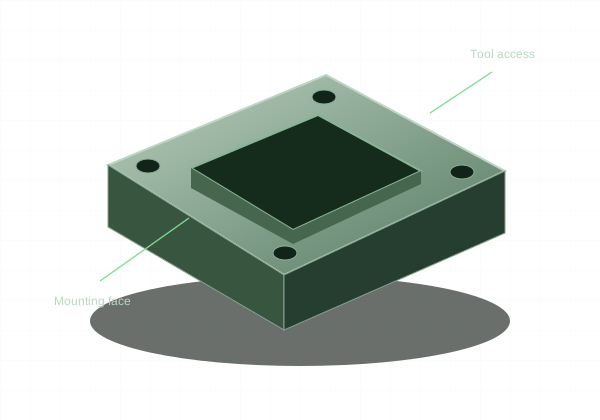
Balance mass, stiffness, and repeatable location. Reducing weight should not sacrifice the rigidity that controls positioning.
Part and process opportunities
End-effector adapters, gripper fingers, sensor mounts, and fixture nests are possible applications. Aluminum machining can support stiff interfaces; printed components can help test shape and handling. A material or process choice does not validate a robot payload or operating envelope.
Design the interface
Keep critical locating surfaces and mounting patterns tied to a defined datum system. Evaluate deflection along with strength. Lightening pockets need generous radii and adequate remaining walls. Avoid adding slender features that vibrate or move under gripping loads.
Plan for the real use
Consider repeated contact, acceleration, and cable motion. Gripper contact pads may need a different material from the structural bracket. Prototype testing should represent the actual object, grip force, and cycle behavior before the design is released.
Prepare a clear manufacturing package
Use a model that represents the intended part, a matching drawing for functional requirements, and a defined material and quantity. Choose the online process for supported configurations. Larger batches, unlisted materials, and special requirements follow custom RFQ. Industry examples describe possible uses; they are not evidence of certification or a past customer relationship.