 Custom parts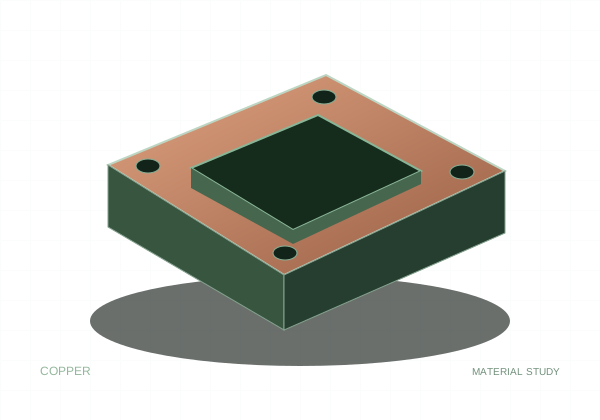
Choose copper for a defined thermal or electrical requirement, then verify the grade and geometry against that requirement.
Material overview
Copper is valued for thermal and electrical conductivity, but different copper alloys and conditions have different properties. High-conductivity grades can be ductile and more demanding to machine cleanly than free-machining brass. Specify the actual grade rather than simply asking for a copper-colored part.
Where it fits
Potential geometries include contact blocks, thermal spreaders, and conductive adapters. Electrical performance depends on cross-section, connection resistance, temperature rise, and contact design. A machined material choice does not establish the current rating of an assembly.
Design considerations
Robust walls, accessible features, and room for burr removal make production easier. Deep narrow slots, delicate fins, and small threads increase difficulty. Large flat contact faces may need a deliberate finish and flatness specification instead of a size tolerance alone.
KRC ordering route
Copper follows the custom RFQ route because it is not a current instant-quote selection. Define material grade, final dimensions, surface requirements, and any coating in the drawing package. Oxidation and handling can change appearance; cosmetic expectations and functional contact surfaces are separate requirements.