 Custom parts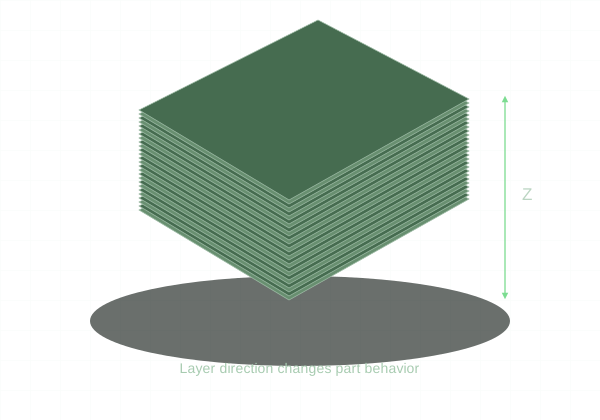
Choose TPU when controlled flexibility is useful. Geometry and material hardness both affect how soft a part feels.
Flexible does not mean dimensionless
TPU is a thermoplastic elastomer. A thick solid pad can feel much firmer than a thin-walled part made from the same material. Infill and wall layout influence compression behavior, so shape and build configuration are part of the design—not just the material name.
Where it fits
Protective covers, compliant contact pads, flexible sleeves, and soft interface prototypes are useful starting points. Printed TPU is not automatically a pressure seal, certified gasket, or food-contact component. Those applications depend on grade, surface condition, geometry, and validation.
Design for release and assembly
Avoid trapping support material inside closed cavities. Fine long projections can be difficult to print cleanly and may deform in use. Add lead-ins for sleeves and insertion features. A stretch fit should be based on a representative prototype rather than the same clearance used for a rigid plastic.
KRC options
The current selector offers black TPU. No specific Shore hardness is published on this guide; the term TPU alone does not establish one. The current upload formats and print envelope apply. Production orientation, supports, and feasibility are reviewed before printing.
Prusa Knowledge Base: flexible materials