 Custom parts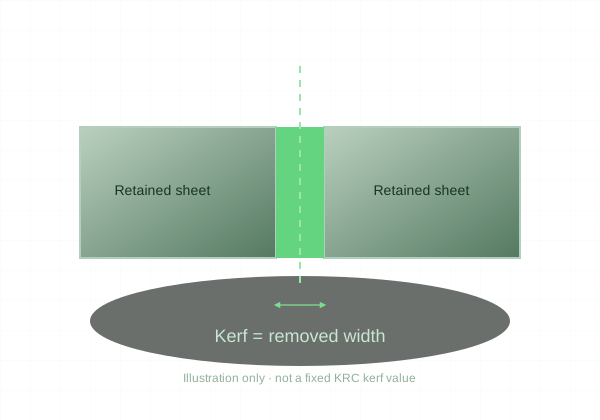
Do not apply the CNC ±0.005 inch standard to laser-cut parts. Material, thickness, and geometry determine the result.
Several variables affect size
A laser removes material over a finite width. That width changes with material, thickness, focus, and process settings. Thermal effects, edge taper, and sheet flatness can also matter. Consequently, one universal tolerance would hide important differences between an acrylic panel and a thick wood profile.
Sheet thickness is a separate dimension
A 2D cut path controls the outline, not the manufactured thickness of the sheet. Nominal stock can differ from its stated fractional size. A slot designed exactly to that nominal size may be too tight or loose even if its cut outline is otherwise acceptable.
Design for assembly
Give clearance holes room for the fastener and the intended alignment variation. For tabs and slots, define whether the joint should slide, hold by friction, or leave space for adhesive. Use a representative fit coupon when the design depends on a sensitive joint.
Keep compensation consistent
Use the intended nominal geometry for a standard upload. Do not apply an assumed kerf offset to a file without a defined compensation convention; that risks compensating twice. KRC does not publish a single blanket laser tolerance in this guide. Dimension-critical projects use a defined custom RFQ scope.