 Custom parts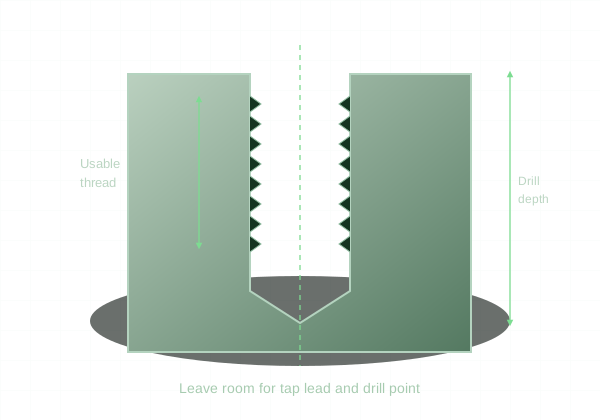
A complete thread callout includes the thread system, size, pitch, and usable depth—not just a hole diameter.
Thread information belongs on the drawing
A cylindrical hole in a STEP model does not reliably communicate its intended thread. Use a PDF drawing to identify threaded holes and their full callouts. For example, 1/4-20 UNC and M6 × 1 are different systems and are not interchangeable. Class of fit, handedness, and insert requirements need explicit definition when relevant.
Blind holes need extra depth
Usable full thread does not extend to the deepest point of the drilled hole. The tap lead and drill point require additional space. Distinguish full thread depth from drilled depth, and leave enough stock below the hole. Avoid requiring full threads against the bottom of a blind feature.
Pipe threads are a different geometry
NPT is tapered. Its nominal size does not equal the measured outside diameter of the thread. Use a full NPT designation and define its location and engagement needs. A straight machine thread is not a substitute for a tapered pipe thread, and thread geometry alone does not establish a pressure rating.
Match depth to the joint
Excessively long threads can add tool risk with little benefit once the weaker component governs joint strength. Required engagement depends on fastener grade, material strength, and load. Thin sections or repeatedly assembled plastic parts may benefit from a designed insert arrangement instead of a deep direct-cut thread.