 Custom parts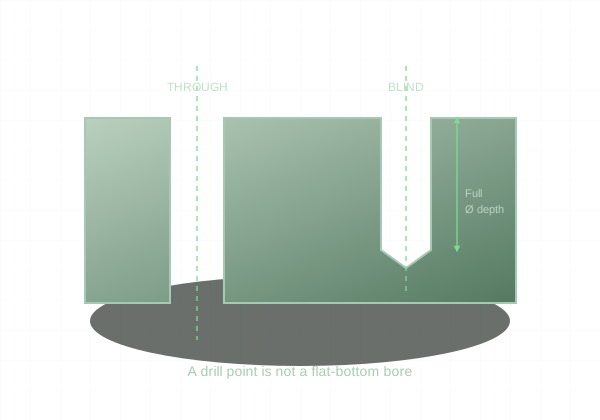
A hole that clears a bolt and a hole that locates a dowel have different jobs—and need different specifications.
Give each hole a function
Clearance holes allow a fastener to pass through. Locating holes establish position with a pin or fitted feature. Threaded holes retain a fastener. Trying to make every bolt hole a close locating fit can create an over-constrained assembly and unnecessary manufacturing cost.
Through and blind holes
Through holes usually offer easier chip evacuation and clearer usable depth. Blind drilled holes typically have a conical bottom unless another operation creates a flat bottom. State whether the depth refers to full-diameter depth or the drill tip when that distinction matters.
Specify entry features correctly
A countersink is conical; a counterbore is cylindrical. Define the diameter, depth or angle, and fastener standard where needed. Leave sufficient material beneath a counterbore and between the hole and the part edge. A thin rim around a fastener seat can deform under tightening load.
Keep deep features practical
Deeper holes require chip control and suitable tooling. Angled entry, intersecting holes, and small diameters can complicate drilling. Standardize diameters when possible and keep special size tolerances limited to actual fits. Hole position requirements need a clear reference, not just a nominal diameter.